
Los Angeles, California — The Dodgers have always embraced young players carrying enormous expectations, especially those searching for the right opportunity to finally unlock their potential.
This situation feels considerably bigger than a routine workout or another depth addition buried somewhere within the relentless MLB transaction calendar.
The Dodgers are not simply offering an evaluation, with discussions potentially moving toward a contract depending on an upcoming medical examination.
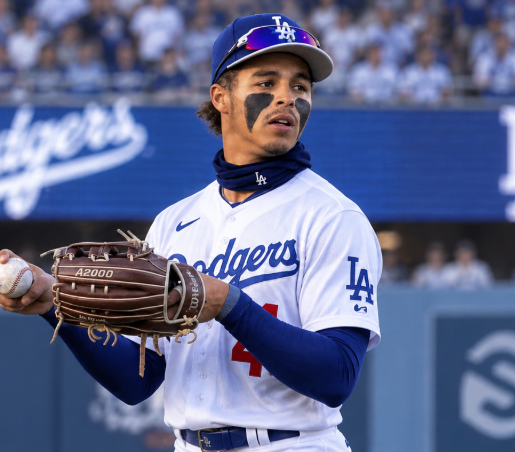
The player at the center of the growing attention is Druw Jones, the highly regarded son of former MLB superstar Andruw Jones.
According to this fictional scenario, Jones rejected an opportunity involving the Boston Red Sox because he preferred pursuing a workout with Los Angeles.
For Jones, the decision is not simply about choosing between two of baseball’s most recognizable organizations.
It is about finding the environment he believes can finally help transform enormous natural ability into sustained success at baseball’s highest level.
Jones entered professional baseball carrying expectations few prospects ever experience because of his athletic tools and the famous surname printed across his jersey.
His father, Andruw Jones, established himself as one of the greatest defensive center fielders of his generation during a decorated MLB career.
The elder Jones accumulated 434 home runs, 1,289 RBIs, ten Gold Glove Awards and five All-Star selections during 17 seasons in Major League Baseball.
Growing up beneath that enormous legacy inevitably created expectations for Druw before his own professional journey had truly begun.
Yet the younger Jones possesses significant tools of his own.
His combination of athleticism, defensive instincts, speed, raw power and natural ability once made him one of baseball’s most celebrated young prospects.
But talent alone has not made his professional journey straightforward.
Injuries and developmental interruptions have prevented Jones from establishing the consistent momentum many evaluators originally expected after he entered professional baseball.
That history makes Los Angeles particularly intriguing.
The Dodgers have developed a reputation for identifying talented players, improving specific weaknesses and creating defined roles within a championship-focused organizational structure.
For Jones, joining that environment could provide something potentially more valuable than simply accepting another contract.
It could offer structure, elite coaching, advanced development resources and an opportunity to establish an identity separate from his father’s enormous baseball legacy.
The medical evaluation would remain an important part of any potential agreement because Los Angeles must understand exactly where Jones stands physically.
If he clears that hurdle, the Dodgers could evaluate him as an athletic outfielder possessing significant developmental upside.
Jones reportedly believes Los Angeles represents an ideal environment for finally converting his natural tools into consistent professional production.
The pressure would nevertheless be enormous.
Every successful performance would inevitably produce comparisons with his father, while every setback could reopen questions surrounding whether he can fulfill expectations.
But that is precisely why this fictional opportunity carries such emotional significance.
Jones would not be choosing the easiest path.
He would be choosing an organization where expectations include championships every season and where competition for playing time never disappears.
For the Dodgers, taking a chance on Druw Jones would represent a calculated gamble on pedigree, athleticism and unrealized upside.
For Jones, however, Los Angeles could represent something considerably bigger.
It could become the place where he finally stops being known primarily as Andruw Jones’ son and begins building a baseball legacy entirely his own.